Opinion
DON’T ASK FOR OUR X — SHOW US WHAT YOU’VE DONE FIRST
I WANT RESULTS.
We Look. We Ask. We Tell The Stories That Matter.
There is something about moving into a new community that can make you see things differently. Streets that were once unfamiliar become part of your daily landscape, and problems that may have existed for years suddenly become impossible to overlook. For Tamsin Murison, moving from Town to HDL appears to have created exactly that moment. She says she really did not want to say anything, but what she saw opened her eyes to something she could no longer ignore: ordinary people are getting the short end of the stick, while too many people talk about the problems and too few appear willing to do something about them.
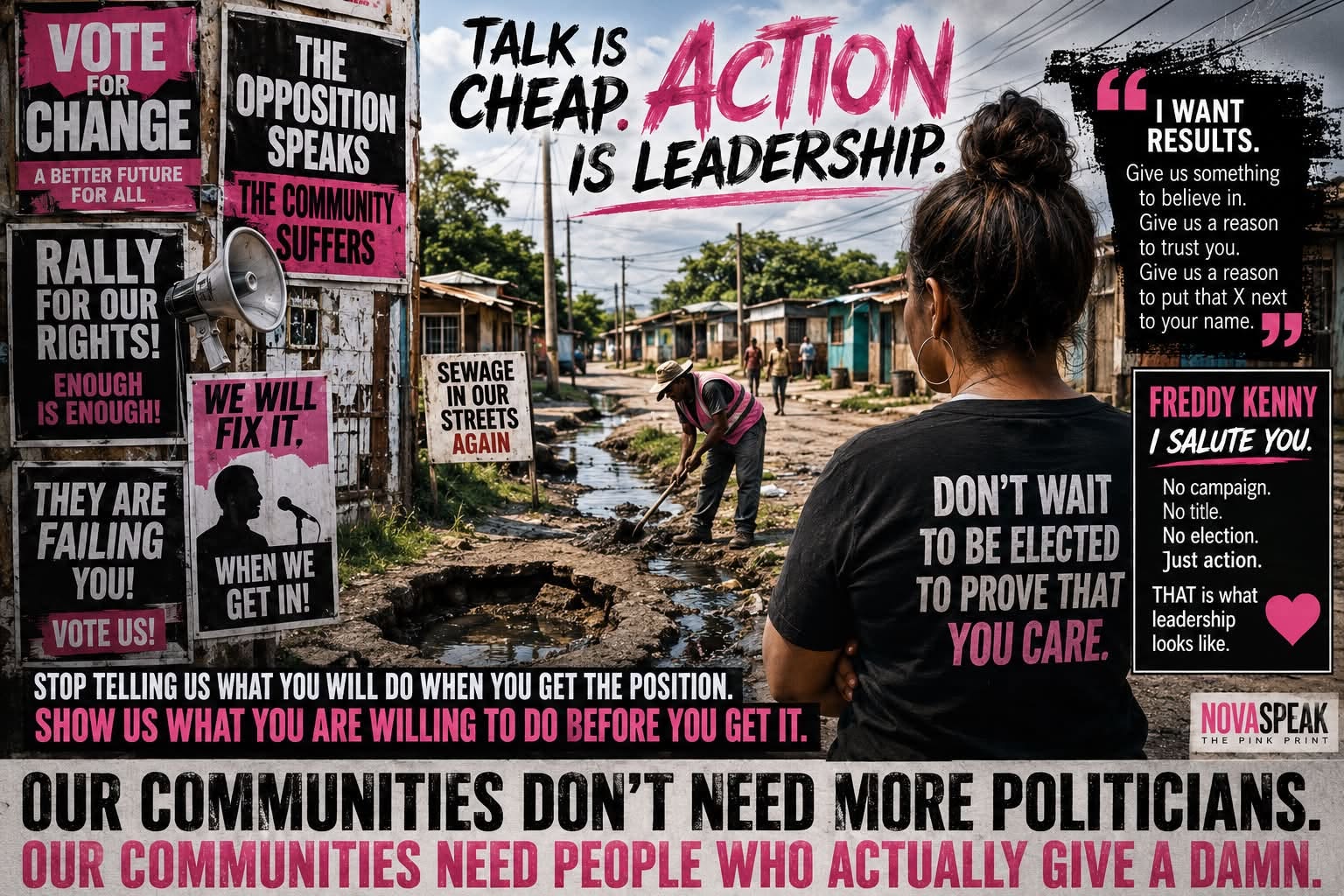
Her Facebook status is not a political manifesto, nor is it a campaign speech. It is a frustrated question directed at the people who claim they want to lead communities. Murison acknowledges that councillors have responsibilities and that those in office must absolutely be held accountable for what happens in the communities they represent. But then she turns the spotlight towards everyone else, particularly the opposition parties and aspiring politicians who spend their time telling residents how useless those currently in power are. The rallies are there. The Facebook statuses are there. The political posters and boards are everywhere. The criticism is constant. But Murison wants to know where the action is.
Where are these politicians when the streets are full of potholes? Where are they when sewage is running through communities? Where are they when ordinary people are struggling and need somebody to step forward? Her question is uncomfortable precisely because it challenges the traditional political script. It asks whether caring about a community should only become visible once a person has been elected, or whether the people asking for votes should already be demonstrating what they are capable of doing.
For Murison, there is no reason to wait. If someone genuinely wants the support of residents, she argues, then they should show the community what they can do before being handed a political position. Fix a pothole. Help resolve a sewage problem. Clean up an area. Organise something that actually benefits residents. Do something. It is a simple demand, but beneath those words sits a much bigger challenge: don’t tell communities what you will do when you have power; show them what you are willing to do before you receive it.
Because Murison says she has reached the point where she does not want another political speech. She does not want another Facebook status. She does not want another poster explaining who is failing. She wants results. Three words that perhaps say more about the mood she is describing than any political slogan could: I WANT RESULTS.
She wants politicians to give residents something to believe in, something that creates trust and, ultimately, a reason to put an X next to their names. And that is where her message becomes particularly pointed. An election gives politicians an opportunity to ask communities for their trust, but Murison appears to be asking a different question: what are you doing to earn that trust before you ask for the vote?
Her post then turns from criticism to recognition as she singles out Freddy Kenny, whom she says she salutes for helping people without waiting for a position, a title, an election or a vote. In Murison’s telling, there is no big political campaign surrounding the work, no constant need for validation and no endless demand for people to look at what is being done. There is simply action. And for her, that is what leadership looks like.
It is an important distinction in the picture she paints. Leadership, in her view, does not necessarily begin with a political title. It can begin with seeing a problem and deciding to help. It can begin with standing alongside residents when there is nothing to gain politically. It can begin with doing the work when there are no cameras, no posters and no ballot papers in sight.
That is why her message to politicians and aspiring politicians is so direct: stop telling communities what you are going to do when you get the position and start showing them what you are willing to do before you get it. Because by the time election day arrives, residents will have heard the promises, seen the posters and watched the rallies. What they may still be looking for is evidence.
And perhaps that is the real image sitting behind Murison’s Facebook status: political posters covering walls while potholes remain in the roads; campaign messages filling social media while sewage remains a problem; politicians telling communities what everyone else is doing wrong while residents continue waiting for someone to actually step forward.
Murison is asking for the equation to change. Less talking. More doing. Less blame. More action. Less telling residents who has failed them and more showing them what you can accomplish yourself.
Because when the election is over and the posters eventually come down, the community will still be standing there. The roads will still need attention. The sewage will still need to be dealt with. Residents will still need help. And the people who asked for their votes will have to live with the question Murison has placed firmly on the table: What did you do before you asked us to trust you?
Her final message is unapologetic. If her words ruffle a few feathers, so be it. She has said what she believes needs to be said. And perhaps that is exactly why the status has such force. It is not asking for another speech, another slogan or another promise. It is asking for proof.
Before asking for the X, show the community why it should be given.
Before asking for the position, show the people who you are without it.
Before asking for their trust, give them something to trust.
Because, ultimately, Murison’s message is not that communities need more politicians.
It is that communities need people who actually give a damn.