Politics
“SIT DOWN DA” — MANGAUNG’S POLITICAL CROWD WAR HEATS UP
Two photos, two different messages, DA – Working for the people and ANC – Big crowds, big message
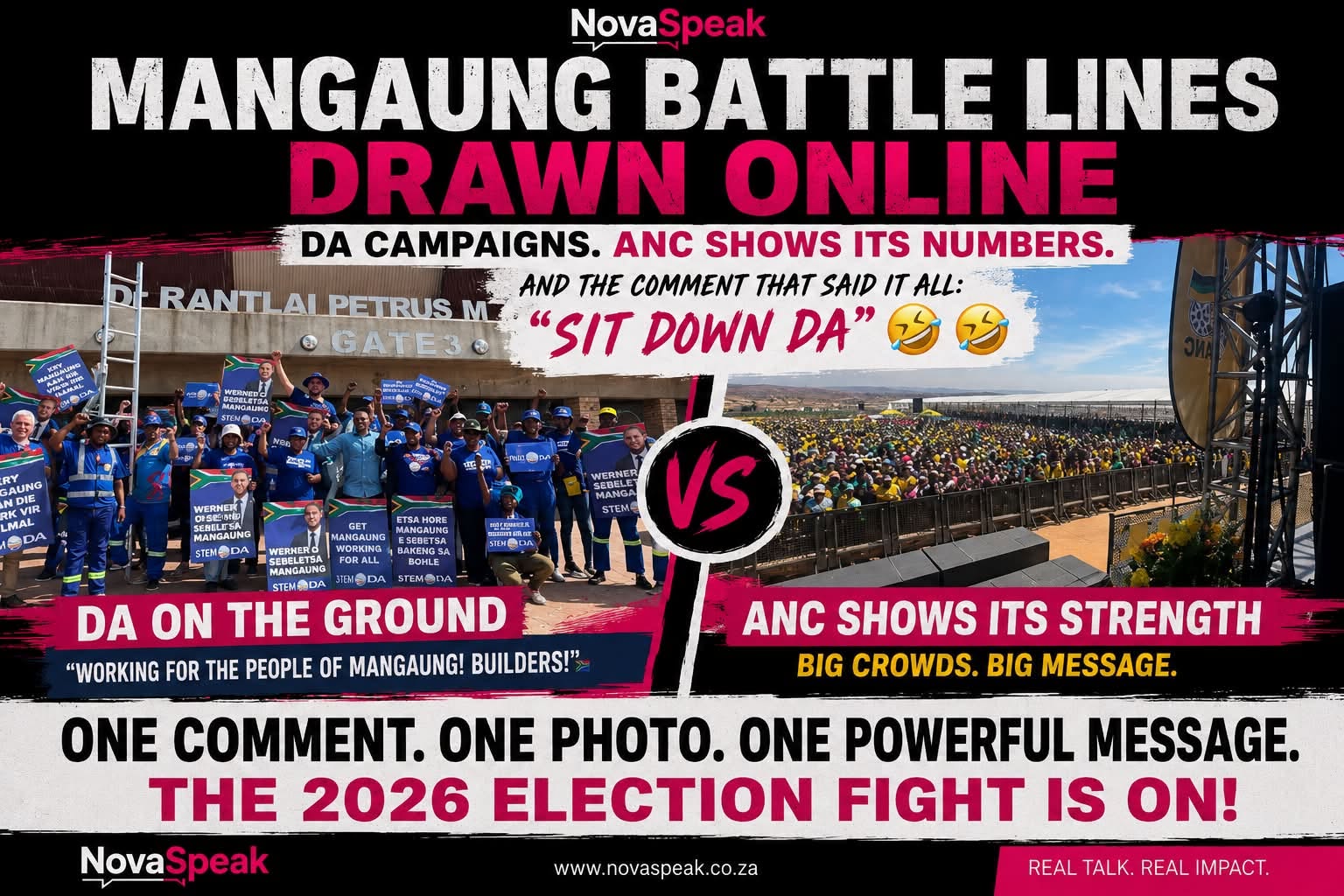
The DA may be taking its campaign message directly to the streets of Mangaung, but one social media response has captured the increasingly heated political contest taking shape ahead of the 2026 Local Government Elections. A post showing DA supporters gathered outside Dr Petrus Molemela Stadium was captioned, “Working for the people of Mangaung! Builders!”, with supporters holding placards promoting Werner Sebletsa and the party’s promise to get Mangaung “working for all.” The images project a picture of organisation, visibility and a campaign determined to take its message beyond social media and into communities.
But almost immediately, the political counterpunch arrived. Facebook user Logan Kruger responded simply: “Sit down DA 😂😂”, accompanying the comment with a photograph showing a massive ANC gathering. On the surface, it was a short social media exchange, but the photograph attached to Kruger’s words gave the response a broader political meaning: the DA may be putting its campaign machinery on display, but the ANC is signalling that it still has the ability to mobilise large numbers of people and remains a powerful force in Mangaung.
That exchange captures something increasingly familiar in modern election campaigns, where photographs of crowds have become political statements in their own right. Every gathering can become evidence of momentum, organisation or strength, while supporters on the opposing side can immediately respond with their own images in an attempt to demonstrate that their political base remains larger, stronger or more established. In Mangaung, the contest is therefore playing out not only on streets and at political events, but also across social media timelines, where a single photograph can become part of the broader battle for public perception.
The DA’s campaign is clearly positioning itself as an alternative for Mangaung, with Werner Sebletsa at the centre of its message and supporters presenting themselves as people prepared to get involved on the ground. The language of “working for the people” and getting Mangaung “working for all” is designed to speak directly to residents frustrated by the challenges facing the municipality, while the visible presence of supporters outside Dr Petrus Molemela Stadium demonstrates the party’s effort to build a campaign that is seen as much as it is heard.
The ANC, however, is not simply disappearing from the political picture, and Kruger’s response highlights precisely that reality. The massive gathering shown in his photograph is being used as a counter-message to the DA’s campaign images: you may have your supporters, but we can still fill the streets. In a political environment where parties constantly compete to demonstrate organisational strength, the size of a crowd can become a powerful visual weapon.
Yet there is an important distinction between political mobilisation and electoral support. A crowd can demonstrate enthusiasm, organisation and the ability of a political party to bring people together, but it cannot by itself determine the result of an election. A crowd is not a ballot. The ultimate test comes when voters stand inside the voting booth and make individual decisions about who they believe should govern them.
That distinction is particularly important in Mangaung, where political loyalty, dissatisfaction with municipal performance, party machinery and voter turnout could all play a role in determining the outcome of the 2026 Local Government Elections. A party can produce an impressive photograph and still fail to translate that momentum into votes, just as a smaller-looking campaign can potentially resonate with voters who are not visible at rallies or public events.
For now, however, the photographs tell their own story. The DA wants Mangaung residents to see a party that is active, organised and ready to challenge the status quo. The ANC's response, amplified through Kruger's “Sit down DA 😂😂”, is effectively a reminder that its political presence remains deeply rooted and capable of drawing significant crowds.
And perhaps that is what makes this early contest so interesting. The political battle is not simply about which party can produce the biggest gathering or the most convincing campaign photograph. It is about whether those images can translate into something much harder to measure: trust from voters who will ultimately decide who gets the opportunity to govern Mangaung.
For the moment, though, the rivalry is unmistakably visible. The DA says it is “Working for the people of Mangaung!” The response from the other side is effectively: we are still here.
Between those two messages lies a much bigger political question, whether Mangaung's voters believe the municipality needs continuity, change or something entirely different when they eventually cast their ballots.
The campaign has started, the political machinery is beginning to move, and the social media exchanges suggest that neither side intends to give the other much room.
In Mangaung, the battle for the streets may have begun, but the real battle will be for the voters.
NovaSpeak | The Pink Print
We Look. We Ask. We Tell The Stories That Matter.